FYI - Tom Dozier is a member of The Church of Jesus Christ of Latter-day Saints - and his coaching is based on professional studies and on the principles of faith and doctrine of the gospel of Jesus Christ.
At the beginning of the presentation, we received this handout: Becoming Better Parents found at this link: http://www.ldsparentcoach.org/uploads/Parenting_the_Lord_s_Way__08-24-09_handout.pdf
The document is in PDF form of the slide presentation, and is 10 pages long with 6 slides per page- print it off or study it from the link. Below I have included the notes I took that correspond to the handout.
Visit the website http://www.ldsparentcoach.org/ for more detailed information.
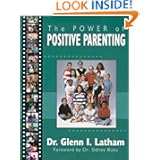
Dr. Glenn I. Latham, 1931-2001 wrote a handful of parenting books (pictured in the handout). The Power of Positive Parenting is one that I have purchased through Amazon, and it is a resourceful book.
The notes that I took down from Tom Dozier's presentation:
Notes to slide 5:
- Parenting is like the Gospel: Heavenly Fathers gives us commandments (parenting) and then blesses us (rewards for obeying).
- Hard part of parenting is Parent Peer Pressure.
- Children have an on/off switch - kids say or agree to something just to get mom to be quiet.
- Parenting by Coercion: it's very easy to do and leads the child to the temperament of "I don't want to, and you can't make me".
- Do not command your kids - it causes them to avoid you.
- The secret to parenting it to "tell your children what you expect them to do, rather than what you expect them not to do."
- Talk very clearly to the child about what they need to do - specifics are a must.
- Example - A young girl throws a huge tantrum every day about getting dressed. As a parent you discuss with her : You can come out of your room when you have put on some clothes that are comfortable and you are not crying. If you put on clothes that are not comfortable, take them off and put on some other clothes. A form of self teaching happens when the parent asks the child specific questions related to what was just discussed: 1) When can you come out? 2) What do you do if your clothes are not comfortable? The child MUST repeat back - it's an important part of teaching expectations.
- Example - parents say "play nicely". Parents must state clearly to the children what that really entails and then have the children re-state it.
- Use the word "EXPECT".
- Example - A child/teenager is not getting their homework done. Parent: I expect you to have your homework done by dinner. When do I expect you to have it done? Child: by dinner time.
- The key to positive parenting is NOT trying to stop inappropriate behavior, but to BUILD appropriate behavior.
- Example: Teenager wants to borrow the car. Parent: You may borrow the car if you will get back home by 9 pm. When do I want the car back? Child: By 9 pm.
- Example: A son wants to purchase something at the store, parents tells the son that he expects him to get his homework done by 8 pm in order to go. What time do I expect you to get your homework done? Child: By 8 pm. The son does not do his homework and it is 8 pm. Parent: I am sorry son, you needed to get your homework done by 8 pm, the consequence is the son does not go to the store.
- Find and recognize behavior that is appropriate. Simply walking by and noting what the child is doing is good - the parent must do this consistently in all activities.
- Do not give any attention to a child's inappropriate attention-getting behavior.
- Focus on the good!
- Catch the child doing what's right!
- Do not label kids negatively when you are frustrated or mad at their behavior, such as telling them they are lazy, not listening, acting out of control, etc.
- Example: "Thanks for being nice to your sister. You are so kind!"
- Example: "Thanks for feeding the dog. I appreciate you being so dependable.
- Example: "Thank you for being calm and sitting still when our visitors came by. You are such a polite person.
- What ever behavior you focus on, you will get more of it.
- Don't give attention to a behavior the child designed to get attention - just avoid, ignore, or move away.
- Special approval is more powerful. Sometimes it takes a tangible reward to get appropriate behavior started.
- Reward: candy or money. Put the $$ into a jar, when it's full - use to do an activity as a family.
- For cleaning chores, keep it short, pleasant, and positive.
- Grandmas Law = First do this (i.e. eat dinner) Then have that (i.e. dessert)
- Inappropriate behaviors are those that cause pain, destructive, cruel, and evil.
- With young children, don't put your attention on the bad behavior.
- If of age and damage is caused, then there is a need for the child to rectify it, replace it, or make restitution.
- Junk behavior (not a big deal) VS. Consequential behavior.
- Some fighting between your children you can't stop - just don't let it be done in your presence.
- The pay-offs are more powerful when rewards are positive. Measure rewards by the guides in the second bullet.
- The most powerful reward for children is our social approval of them.
- Must keep child engaged in doing the appropriate behavior.
- PHE = Positive Home Environment
- Mom/Dad must be happy and smile, lighten up- don't be grumpy!
I hope you'll find this information as captivating as I found it. 23 more weeks and I'll have a baby to practice with!


Congratulations! What a huge blessing and miracle! Thanks for posting your notes and the link. It is very helpful information.
ReplyDeleteI'm SO excited for you and S.
Thanks for this! I actually have been studying parenting a bit and really like the love and logic model but I am excited to read and study this. Hope you are doing well!
ReplyDelete